
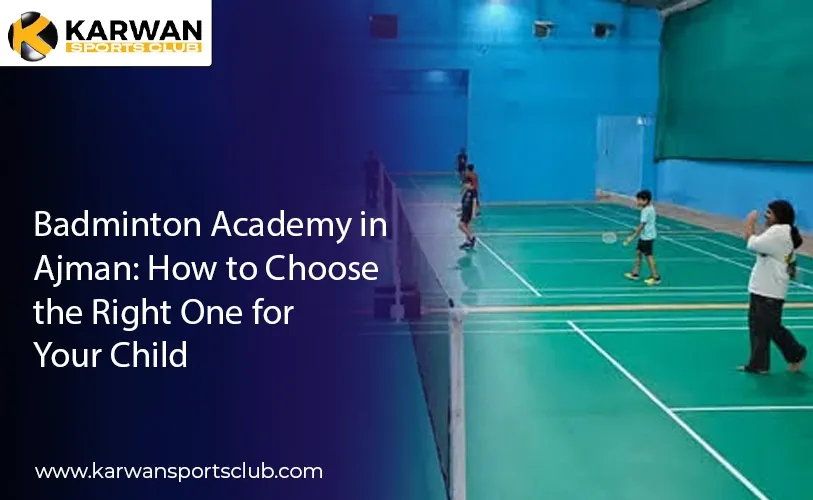
Your child wants to learn badminton. You search for a Badminton Academy in Ajman, find several options and then realise that most of them seem to offer almost the same thing.
Indoor courts. Experienced coaches. Professional training. Kids classes.
That is where the real decision starts.
A parent is not simply paying for court time. You are choosing the place where your child will spend time each week, learn a new sport and possibly develop an interest that stays with them for years.
The best choice will depend on your child. A six-year-old who has never played before needs a different kind of class from a 14-year-old who already plays regularly. Some children want to compete. Others just want something fun to do after school.
So before looking at membership prices or fancy facilities, think about what your child actually needs.
Start With the First Visit
The quickest way to understand an academy is to visit it.
Websites can tell you about coaching programmes and facilities, but they cannot show you what a normal class feels like. Visit during a training session if possible. Watch for a few minutes.
Are the children actually playing or spending most of the time waiting?
Does the coach move around the court and correct players?
Do beginners look comfortable?
Is the atmosphere serious without being intimidating?
These details matter more than a long list of claims on a website.
The Coach Matters More Than the Court
A shiny court cannot fix poor coaching.
For young children, the coach needs to know how to teach rather than simply how to play badminton. A child may not understand why their grip is wrong or why their feet need to move before their racket. They need someone who can explain it without making the lesson complicated.
Watch the coach’s reaction when a child makes the same mistake twice.
A good coach will usually demonstrate the movement again or find another way to explain it. That patience is especially important with younger players.
You can also ask how long the coach has been working with children and what age groups they normally teach. It is a simple question, but the answer can tell you whether the academy has the right person for your child’s age.
This is one area where parents should not be shy about asking questions.
Your Child Does Not Need the Hardest Class
Parents sometimes assume that an advanced programme must be better.
It is not.
Imagine putting a child who has never played badminton into a group where everyone is already comfortable with serves, rallies and footwork. They will spend the first few sessions trying to keep up instead of learning properly.
A good badminton coaching for kids in Ajman programme should have a sensible starting point.
For beginners, that may mean learning how to hold the racket, stand properly, serve and move around the court. There is nothing glamorous about these skills, but they form the foundation for everything that follows.
Once the child becomes comfortable, training can become more demanding. Footwork, different strokes, court positioning and rally control can come into the picture.
The important thing is progression. Your child should be learning something new without feeling that every class is too difficult.
What Does a Good Children’s Class Actually Look Like?
A good children’s session should not feel like a school lecture.
There should be instruction, practice and plenty of chances to play.
For younger children, coaches may use simple movement exercises and games to develop coordination. Older players can spend more time working on specific strokes, footwork and match situations.
The UAE Badminton Federation’s Shuttle Time programme is designed for children aged 5 to 15 and places emphasis on making badminton safe, enjoyable and suitable for young players.
That is a useful idea for parents to keep in mind. Children do not need to be pushed into serious competition from their first lesson.
First, they need to enjoy being on the court.
A Small Class Can Be a Big Advantage
Class size is one of those things you might not think about until you see a crowded session.
If one coach has a large group, there is naturally less time for individual correction. Your child may know that their footwork is wrong but have no idea how to fix it.
Ask how many children normally attend one session.
Then look at how the court is being used.
A group can be relatively large and still work well if the coach has a good system and keeps everyone involved. A small group can also be poorly organised.
So do not judge the number alone. Look at what actually happens during those 60 or 90 minutes.
Group Classes or One-to-One Coaching?
For most children, starting a group class is perfectly reasonable.
They learn alongside other children, get used to sharing a court and eventually practise rallies with players who are not their coach. There is also a social side to it. Some children become more interested in badminton because they enjoy seeing the same friends each week.
Private badminton coaching in Ajman makes more sense when a player has a particular weakness or a clear competitive goal.
For example, a child might have good strokes but poor footwork. A private session gives the coach time to focus on that problem without having to divide attention between several players.
There is no need to choose private lessons simply because they sound more serious.
Take the Trial Class Seriously
If an academy offers a trial, use it properly.
Do not only ask your child whether they liked it. Ask what they actually did.
Did they learn how to serve?
Did the coach show them a new movement?
Did they get enough time to play?
Did they understand the instructions?
Then ask your child something even simpler: “Would you like to go again?”
Their answer may tell you more than any brochure.
Infinity Fitness Club, for example, currently promotes children’s sports programmes in Ajman and offers trial opportunities for some activities.
A trial gives both sides a chance to see whether the programme works. It is much better to discover a poor fit after one session than after paying for several months.
Think About the Journey Too
A brilliant academy that takes an hour to reach may not be brilliant for your family.
Children already have school, homework and family commitments. If badminton is going to be a weekly activity, the journey needs to be manageable.
For a family living around Al Jurf, a facility in or near that area may make more sense. Families around Al Hamidiya have their own nearby options, while those in Al Raqaib may prefer somewhere closer to home.
There are currently badminton courts and sports facilities listed in several parts of Ajman, including Al Jurf and Al Hamidiya.
Location should not override coaching quality. But when two academies are similar, the closer one usually wins in the long run.
Why?
Because attendance becomes easier.
And children improve when they actually show up.
Does Your Child Want to Play Competitively?
You may already know the answer.
If your child talks about tournaments, watches badminton matches and wants to beat their previous score every time they play, they may eventually want a competitive pathway.
But do not assume every talented child wants that.
Some children simply enjoy the game.
For recreational players, a friendly kids badminton academy in Ajman may be all they need. They can build fitness, coordination and confidence while enjoying the sport.
For children who want competition, ask about advanced groups, match practice and tournament preparation. Some academies in the UAE separate recreational development from more structured performance training.
Let the child lead the process where possible.
A sport becomes much harder to enjoy when it starts feeling like another school subject.
What Should You Ask Before Paying?
You do not need to make a huge checklist.
A short conversation with the academy should cover the important points.
Ask who will coach your child, how players are grouped and how many children normally train together. Find out whether there is a trial class and what level they recommend for your child.
Then ask what the child is expected to learn during the first few months.
If the answer is simply “they will improve their badminton”, ask for more detail.
A good academy should be able to explain its approach without using complicated language.
Also confirm the fee, timetable, equipment requirements and rules for missed sessions before you pay.
The Right Choice Is the One Your Child Will Keep Attending
There is no universal answer to the question of which is the best badminton academy in Ajman.
The right choice for one child may be completely wrong for another.
A beginner may need a patient coach and a friendly group. A more experienced player may need tougher training. One family may value location above everything else because of school schedules. Another may be willing to travel further for a particular coach.
Look at the class. Speak to the coach. Let your child try it.
Then pay attention to what happens afterwards.
If your child comes home tired but happy, talks about what they learned and asks when the next session is, you are probably moving in the right direction.
That is ultimately what parents should want from badminton coaching in Ajman. Not just a place where a child hits a shuttle for an hour, but a place where they learn the game, become more confident and genuinely want to come back.
FAQs
Q1: What age is suitable for starting badminton?
There is no single perfect age. Many children’s programmes accept young beginners, with activities adjusted to their age and ability. Younger children usually benefit from simple games and movement work before moving into detailed technique.
Q2: How many times a week should my child train?
One or two sessions a week can be a sensible starting point. If the child becomes more serious about badminton, training frequency can increase gradually.
Q3: Should beginners have private coaching?
Usually, they do not need it. A well-run group class can teach the fundamentals while also giving children the chance to practise with other players.
Q4: What should my child take to badminton class?
A racket, indoor sports shoes, comfortable sportswear and water are usually enough. Check with the academy before buying equipment because requirements can differ.
Q5: How do I know if an academy is working for my child?
Look beyond short-term results. Notice whether your child is learning new skills, becoming more comfortable on court and still enjoying the sessions after several weeks. Those are better signs than winning every game.