
Introduction
Choosing the right time to introduce your child to organized sports can be difficult. Some children naturally enjoy physical activities, while others need a little encouragement before committing to regular training. If your child enjoys hitting a shuttle, running around the court, or watching badminton matches, joining a badminton academy in Ajman could be a great next step.
Badminton can help children develop coordination, movement, focus, confidence, and discipline. Ajman has several training options for young players, with programs designed for beginners as well as children who already have some playing experience.
What Age Is Suitable for Badminton Training?
There is no single age at which every child should begin badminton coaching. Readiness depends more on interest, physical coordination, attention span, and willingness to participate than on age alone.
Many structured programs accept young beginners and introduce them to basic skills such as grip, racket control, footwork, serving, and simple rallies. The UAE Badminton Federation has also supported badminton development through structured training initiatives for children and young players.
For younger children, the first goal should not be competition. Training should feel enjoyable and help them become comfortable with the court and equipment.
Signs Your Child Is Ready for Structured Badminton Training
One of the clearest signs is genuine interest. If your child regularly asks to play badminton, enjoys watching others play, or wants to improve after hitting the shuttle, they may be ready for a beginner class.
Another sign is basic physical coordination. Your child does not need to be athletic before joining an academy. However, being able to run, change direction, hold a racket, and follow simple instructions can make the learning process easier.
Attention span is also important. Badminton coaching involves listening to instructions and repeating movements. A child who can focus on a short activity and follow a coach’s directions is generally better prepared for structured sessions.
Your child’s attitude toward practice matters as well. Beginners will miss shots, struggle with timing, and make mistakes. If your child is willing to try again instead of becoming frustrated immediately, formal coaching can help build their skills and confidence.
Does Your Child Need Previous Badminton Experience?
No. A child does not need to know how to serve, smash, or perform advanced footwork before joining a beginner program.
Beginner badminton classes are designed to introduce fundamental techniques gradually. Some Ajman programs specifically offer beginner-level sessions and organize training according to player ability.
A good coach can first assess your child’s coordination and basic movement before progressing to more advanced drills. This is why parents should focus on finding an age-appropriate training environment rather than expecting their child to have skills before joining.
Choosing the Right Badminton Racket for Your Child
Equipment can make a noticeable difference when a child starts learning. A badminton racket that is too heavy or difficult to handle may make basic movements harder and can affect the child’s enjoyment of training.
For beginners, a lightweight junior racket is usually easier to control. For example, junior rackets available in the UAE market can weigh around 75–90 grams and are designed around the needs of younger players.
Parents should consider the child’s age, height, hand size, strength, and playing level before choosing equipment. Instead of buying an expensive professional racket immediately, it is often more practical to start with suitable junior equipment and upgrade as the child’s skills develop.
A coach can also help determine whether the current badminton racket is suitable or whether the child needs a different weight, length, or grip.
Why Coaching Can Be Better Than Casual Play
Playing badminton at home or with family is an excellent way to introduce a child to the sport. However, structured coaching adds consistency and technical guidance.
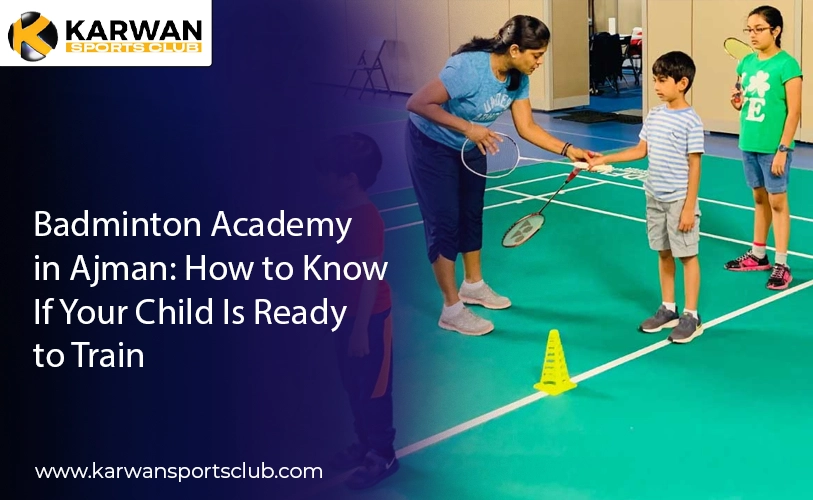
A coach can teach the correct grip, stance, swing, footwork, serving technique, and court positioning. These fundamentals are easier to develop correctly when a child receives feedback from the beginning.
Structured sessions can also introduce children to other players. This creates opportunities to learn teamwork, sportsmanship, communication, and healthy competition.
Ajman badminton programs commonly combine technical instruction with fitness, agility, reflex, and match-play activities.
What Should Parents Look for in a Badminton Academy in Ajman?
The right academy should provide a safe and encouraging environment where children can learn without unnecessary pressure. Before enrolling, parents should consider whether the coaching program separates players according to age and skill level.
Qualified coaching is another important consideration. Children need instructors who can explain techniques clearly and understand how to keep young players engaged.
The training facility also matters. Suitable courts, adequate space, appropriate equipment, and a well-organized schedule can make regular training more comfortable.
Parents should also ask whether the academy offers trial sessions. A trial gives your child an opportunity to meet the coach, experience the training environment, and decide whether they genuinely enjoy the activity.
Some Ajman academies advertise beginner and children’s programs, while others offer progression from beginner to intermediate and advanced levels.
How Often Should a Child Train?
The ideal training frequency depends on age, school commitments, fitness level, and goals. A young beginner does not necessarily need intensive daily training.
Starting with a manageable schedule can help children develop consistency without feeling overwhelmed. As their interest and ability increase, training frequency can be adjusted.
For children who eventually want to compete, a coach may recommend additional practice, fitness work, and match experience. Competitive pathways generally require more commitment than recreational badminton.
The most important objective at the beginning is to build a positive relationship with the sport.
When Should You Consider More Advanced Training?
You may consider moving your child to a higher training level when they demonstrate consistent interest, improved technique, better court movement, and the ability to follow more complex coaching instructions.
Participation in friendly matches can also reveal whether your child enjoys competitive situations. However, competition should be introduced gradually.
Some advanced badminton programs use assessments or coach recommendations before accepting players into more intensive training groups. This approach allows the coach to match the player’s ability and commitment with the appropriate level.
Make the First Step Enjoyable
Your child’s first experience with badminton can influence whether they continue with the sport. Avoid putting too much pressure on performance. Instead, celebrate small improvements such as learning a correct grip, making a successful serve, or completing a short rally.
The right badminton racket, comfortable sportswear, suitable shoes, and supportive coaching can make those early sessions more enjoyable. Most importantly, allow your child to develop at a natural pace.
If your child enjoys badminton, can follow basic instructions, and is willing to participate regularly, they may already be ready to explore structured training.
Conclusion
Knowing whether your child is ready for badminton training is less about finding a perfect age and more about recognizing their interest, coordination, attention, and willingness to learn. A beginner-friendly badminton academy in Ajman can provide the structure and coaching needed to turn casual interest into useful skills.
Start with an age-appropriate program, choose suitable equipment such as a lightweight badminton racket, and give your child time to develop confidence. With patient coaching and regular practice, badminton can become an enjoyable activity that supports fitness, coordination, discipline, and long-term sporting development.