
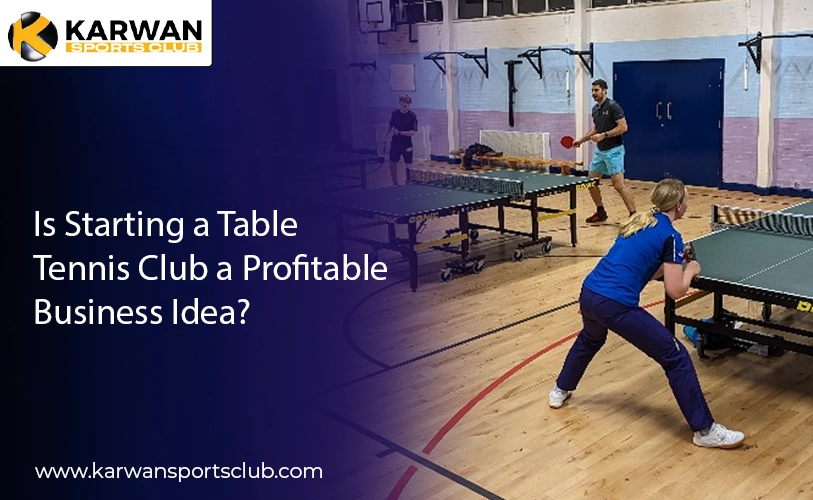
Why a Table Tennis Club Business Can Be a Worthwhile Opportunity
Table tennis is a game that can be played by people of all abilities and fitness levels. The novice can have a good time with a casual game, the more experienced player can be having a go at regular practice and competitive matches. That gives the club the opportunity to cater to a number of different customer groups rather than just one.
The space requirement can also make the business a whole lot easier to plan than a large sports facility. A fairly standard indoor venue with plenty of space between the tables, safe flooring, lighting and the basic visitor facilities you’d expect would be more than adequate for a small operation. The exact layout will of course be dictated by the number of tables and the level of play the club is going to be able to cater for.
A well run sports club can also draw in customers who are looking to try out a number of different activities, provided the range of facilities is clearly presented and the booking arrangements are straightforward. That in turn creates the opportunity for cross promotion and for the customer to come back again.
How to Start a Table Tennis Club
Learning how to start a table tennis club begins with a practical plan rather than an equipment order. The first thing you need to do is work out what kind of club you want to be. You could have a small club operating out of a local venue which provides hourly bookings and some basic beginner sessions. Alternatively you could have a much larger club which offers coaching, leagues, tournaments and memberships.
Your business plan should cover the target market, the services you’ll be offering, the expected opening hours, your pricing and your estimated expenses. You need to include a realistic financial forecast. Work out how many paid playing hours you’ll need each week to cover your rent, your staff, your utilities and all your other recurring costs. It’s better to be conservative with your figures than to assume that every table will be occupied.
You should also look into local business registration, licensing, insurance and safety requirements prior to opening. Those will vary from place to place so you’ll need to check with the appropriate authorities. For some inspiration on how a sports facility can be set up and presented, have a look at this guide to the sports club experience as you’re designing your own customer experience.
Table Tennis Club Startup Costs: What Should You Budget For?
Table tennis club startup costs will vary enormously depending on the size of the venue, the condition of the venue and the range of services you’re planning to offer. A small club based in a venue that’s already ready to go is going to have a very different cost structure to one that’s going to require a lot of work (new flooring, new electrical etc).
The major initial outlay is typically the venue. You’ll be looking at the cost of a security deposit, advance rent, any required renovation and the cost of getting the basic utilities in place. Before you even start looking at a property you should measure the actual playing area rather than the total floor area. You need to have enough space around the tables for the players to move, to get the ball and to play without it being an intrusion on the other games.
Equipment is another big cost. You’ll need to budget for commercial quality tables, nets, posts, bats, balls and barriers. You may also need to factor in seating, storage, reception furniture, lighting and cleaning supplies. It’s a complete mistake to go for the cheapest equipment as you’ll end up with it all being worn out and needing replacing all the time. You need to look at the durability and the right type of equipment before you buy.
What Equipment Is Needed to Open a Table Tennis Club?
| Equipment / Facility | Purpose | Important Considerations |
| Table Tennis Tables | Provide the main playing surface for practice and matches. | Choose durable tables with a stable frame, consistent bounce, and suitable playing standards. |
| Nets and Posts | Divide the playing area and support regular matches. | Keep spare nets and posts available to avoid interruptions. |
| Bats and Balls | Allow customers to play, including those who do not bring their own equipment. | Maintain enough bats and a regular supply of quality balls. |
| Good Lighting | Help players follow the ball during games. | Ensure the entire playing surface is properly illuminated. |
| Non-Slip Flooring | Support safe movement and reduce the risk of slipping. | Choose clean, durable flooring suitable for indoor sports. |
| Playing Area Barriers | Prevent balls from moving into neighbouring playing spaces. | Position barriers between tables without restricting player movement. |
| Reception Desk | Manage customer enquiries, registrations, and payments. | Keep the reception area organised and accessible. |
| Benches and Lockers | Give customers a place to sit and store personal belongings. | Provide practical seating and secure storage where possible. |
| Scoreboards | Help players keep track of match scores. | Use simple, easy-to-read scoreboards. |
| First-Aid Supplies | Provide basic support in case of minor injuries. | Keep a stocked first-aid kit in an accessible location. |
| Booking System | Manage table availability and customer reservations. | Use a clear system to prevent booking conflicts during busy hours. |
Table Tennis Business Profitability: Where Does the Money Come From?
Table tennis business profitability is all about balancing your income against your operating costs. You can generate a regular income stream through membership fees and you can also take in income from people who want to book the tables on an hourly basis. You can have a range of membership options too (student, family, regular player etc.) to suit different types of customers.
Additional sports facilities, such as gym facilities in Ajman, can also provide ideas for attracting people interested in different fitness activities.
Remember that total sales don’t equate to profit. Rent, staff wages, electricity and maintenance all have an effect on your bottom line. You need to track your monthly income against your monthly expenses to work out which of your services is actually the most profitable.
Common Challenges to Consider Before Investing
| Common Challenge | How It Affects the Business | Possible Solution |
| Inconsistent Demand | The club may be busy during evenings but have fewer bookings during working hours. | Offer daytime coaching, school partnerships, and flexible pricing to attract customers during quieter periods. |
| Competition | Customers may already have access to community centres, schools, or other sports facilities. | Stand out through quality playing conditions, convenient bookings, organised coaching, and a welcoming atmosphere. |
| Equipment Maintenance | Regular use can wear down tables, nets, flooring, and lighting, affecting the playing experience. | Set aside a maintenance budget and inspect equipment and facilities regularly. |
| Staffing Issues | Poorly trained staff can create problems with bookings, payments, safety, and customer service. | Hire responsible employees and provide clear training on daily operations and club rules. |
| Expanding Too Quickly | Adding tables or services before demand grows can increase expenses without generating enough revenue. | Expand gradually when customer numbers, bookings, and cash flow support the investment. |
Is Owning a Table Tennis Club Profitable?
Owning a table tennis club can be a profitable proposition if there’s sufficient local demand, sensible pricing and good control of costs. It’s not in itself a high-return business. The bottom line will depend very much on the venue, the number of paying customers, the hours the tables are in use and the range of services you provide. Exploring different table tennis club revenue ideas, such as coaching sessions, memberships and local tournaments, can also help create additional income streams.
A small club is of course far easier to run and will require far less initial outlay, but its income potential is going to be capped by the number of tables. A larger club can take in more business, no doubt about that, but that’s usually at the cost of much higher rent, much higher staffing and much higher maintenance.
Before you open do a break even calculation. Add up your monthly fixed costs, work out your membership and booking income and then work out how many paid sessions you’d need to break even. Then ask yourself whether that level of customer activity is achievable in the area.
The best thing to do is start small, work out what people are actually using and then build on that. A club with good facilities and a good reason for people to come back is going to be in a far better position to generate a sustainable income over the long term.
Final Thoughts
A table tennis club could be a viable business proposition, but it all comes down to how well you’ve thought it through and how well you can run it. It has the potential to attract a very wide demographic indeed from the complete novice, through to families, students and the more experienced player. The fact that it’s a sport in itself doesn’t necessarily mean it’s a profitable business though. You’ll need a good location, good equipment, sensible pricing and a sufficient number of regular bookings to cover the running costs.
Before you invest at all you need to do your research into the local market and speak to the people who may well be your customers. You need to work out what type of venue you’re going to be. Are you going to be a casual play venue? A membership type venue? A coaching venue? A competitive events venue? That will then determine the amount of space you need, the amount of equipment and the amount of staff you’re going to require. Your budget should be a realistic one which will cover the initial outlay as well as several months of operating costs.
A well run table tennis club can easily become a real community sport venue as well as a source of income. The way to do it is to build around actual customer requirements rather than spend a fortune at the outset. Start small, provide a good playing experience and let the actual demand for the service be the thing that drives your growth.
Frequently Asked Questions
1. How much does it cost to start a table tennis club?
The cost will be very much dependent on the venue (how big it is), number of tables, quality of equipment, amount of renovation required and the local rental rates. A small club in a venue that’s already in a state to go would probably have a very different initial outlay to a larger venue which would require a lot of construction or a lot of work to get it to a decent standard.
2. Is owning a table tennis club profitable?
It can be profitable if the club attracts regular customers and manages expenses carefully. Memberships, hourly bookings, coaching and tournaments can provide income. However, rent, staff wages, utilities and maintenance must be covered before the business makes a profit.
3. How much money can a table tennis club make per month?
Monthly revenue varies according to the number of tables, booking rates, operating hours and customer demand. A club with regular memberships and busy playing sessions may earn more than one relying only on occasional visitors.
4. What equipment is needed to start a table tennis club?
The essential equipment includes table tennis tables, nets, posts, bats and balls. You may also need barriers, suitable flooring, good lighting, seating, storage, reception furniture, cleaning supplies and first-aid equipment.
5. How many table tennis tables are needed to start a club?
A small club can begin with a few tables if the space and budget are limited. The right number depends on expected demand, available floor area and the type of customers you want to serve.