
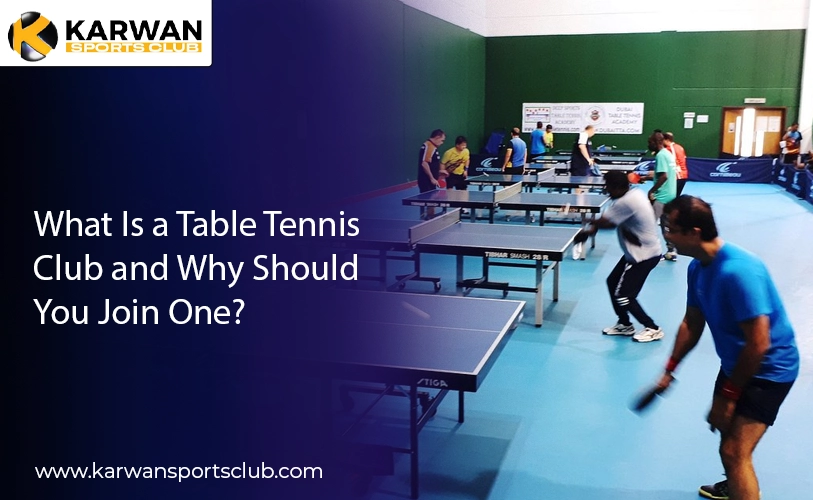
A proper table tennis club isn’t just a room with a few tables in it. It’s coaching, equipment, scheduled sessions, and a group of people who show up regularly, which turns a game most people only play occasionally into something you can actually get better at. In a place like Ajman, where an indoor sport that works year-round regardless of the heat outside is genuinely useful, that distinction matters more than it might elsewhere. This article goes through what a table tennis club actually involves, why the sport is worth taking seriously in the first place, and what changes once you join one rather than just playing now and then.
What a Table Tennis Club Actually Involves
Strip away the assumptions and a table tennis club is fairly simple: a dedicated space with properly maintained tables, decent lighting and flooring, equipment for people who don’t own their own yet, and some structure around how people play. That structure is really the whole point. Instead of hoping someone else happens to be free, there are scheduled sessions, coaching for people who want it, and usually some kind of internal league or ladder for players who’d rather compete than just rally.
Most clubs end up serving a fairly wide mix of people under one roof: complete beginners who’ve never held a paddle, kids there mostly for something active to do after school, adults treating it as their main form of exercise, and a smaller group playing at a genuinely competitive level. A decent table tennis club Ajman will have a way of fitting all of them in without the beginners feeling out of place next to the more serious players.
Why the Sport Itself Is Worth Your Time
Before getting into the case for joining a club, it’s worth being clear about why table tennis is worth playing at all. Physically, it’s unusually good at building reflexes and hand-eye coordination, since the ball moves fast and the margins for error are small. It raises your heart rate more than people expect from something played standing mostly in one spot, and because it’s low-impact, it’s kinder to knees and joints than a lot of other racket sports. Mentally, it demands real concentration and split-second decisions, which is part of why a lot of people describe an hour of it as surprisingly good stress relief.
It also happens to suit the UAE better than most outdoor sports. Being fully indoors means the heat outside is irrelevant, so it’s playable with total consistency across the year rather than only in the cooler months. It’s also genuinely a sport for a wide age range, often cited as something people pick up anywhere from around five years old through to well past sixty, without much needing to change about how it’s taught.
There’s also a practical side that doesn’t get mentioned enough: the equipment is cheap compared to most racket sports, and a single table can realistically fit four or five people rotating through games in the time it takes to book and use one squash or badminton court. For a family trying to find something everyone can do together, regardless of age or fitness level, that combination of low cost and genuinely shared difficulty curve is hard to match.
What You Actually Get From Joining, Long-Term
Coaching that fixes habits before they set in. Learning on your own means whatever grip, stance, or stroke you land on by accident is the one you keep, good or bad. A bit of structured table tennis training Ajman early on heads off the kind of habits that are much harder to unlearn later.
Equipment you don’t need to buy before you know you’re hooked. Most clubs keep a rotation of paddles available, so trying out a table tennis racket on your first few visits means you’re not spending money on gear before deciding whether the sport is actually for you.
People to play with, consistently. This is the benefit that’s easy to underrate until you’ve tried the alternative. Playing alone means finding a partner every single time; a club means there’s almost always someone around at roughly your level, which is a big part of what makes the whole thing social rather than a solo chore.
A reason to actually keep showing up. Scheduled sessions do something that good intentions alone rarely manage: they turn “I should play more table tennis” into something that happens on a fixed day each week whether or not you feel like it that particular evening. That consistency, more than any single session, is where most of the real improvement over months and years comes from.
Somewhere to go if you want to compete. Not everyone wants this, and that’s fine, but for the people who do, internal leagues and ladder systems give a path from casual play into something closer to genuine competition, without needing to look elsewhere for it.
Is It Actually Beginner-Friendly?
Yes, more so than most racket sports. The basic mechanics, hitting the ball back over the net, are easy enough to pick up in a single session, and the difficulty scales naturally as you improve rather than requiring a steep climb before you can play a point at all. A typical introductory session is built around exactly this: a few basics, some simple rallying, and enough structure that a complete beginner doesn’t feel lost in their first hour.
The other common hesitation, needing to buy equipment before even trying it, usually isn’t an issue. Most clubs let newcomers borrow a table tennis racket for their first several sessions, so the only real commitment up front is showing up and seeing whether you like it.
Finding the Right Club in Ajman
Not every facility calling itself a club is set up the same way, so it’s worth checking a few things before signing up anywhere. Coaching quality matters more than almost anything else, since it’s the difference between improving steadily and plateauing early. The physical setup, table condition, lighting, enough space between tables, matters too, more than people expect until they’ve played somewhere cramped or poorly lit. Beyond that, look for clear scheduling that separates beginner sessions from more advanced play, straightforward membership pricing, and ideally the option to try a session before committing to anything longer.
It’s also worth asking a few direct questions before joining rather than assuming: how many coaches are actually on the floor during a typical session, whether beginners get any one-on-one attention or are left to figure things out among more experienced players, and what happens if a class is overbooked. None of these come up in a glossy brochure, but they’re usually the difference between a club that genuinely helps you improve and one that just has tables in a room.
If you’re trying to work out which option actually deserves the title of the best sports club in Ajman, a trial visit tells you more in twenty minutes than any amount of reading reviews online. And if table tennis turns out to be the start of something bigger, it’s worth exploring what a full Sports Club experience can offer beyond just one table.
Final Thoughts
The honest answer to “why join a table tennis club” is that almost everything genuinely good about the sport, getting better instead of plateauing, having people to play with, actually sticking with it past the first few weeks, depends on structure that’s hard to create on your own. Casual, occasional play can be fun, but it rarely turns into real improvement, and it’s even more rarely something you keep doing for years.
A club fixes that by building the structure in from the start: coaching that corrects mistakes early, equipment so you’re not buying gear speculatively, people to play with on a predictable schedule, and somewhere to go if competing ever appeals to you. None of that requires any prior experience. It just requires showing up once to find out whether it suits you, and most people who do end up surprised by how quickly it becomes a normal part of their week rather than a one-off. If you’ve been curious about table tennis and kept putting it off, a trial session is a low-stakes way to stop wondering and actually find out.
Frequently Asked Questions
Q1. What is a table tennis club and what activities does it offer?
It’s a dedicated space with proper tables and equipment, usually offering a mix of casual play, structured coaching sessions, and internal leagues or ladder competitions for players who want to progress or compete.
Q2. What are the benefits of joining a table tennis club?
The main ones are consistent coaching, equipment you don’t have to buy upfront, regular people to play with at your level, and the kind of fixed schedule that makes it far easier to actually stick with the sport long-term.
Q3. Is table tennis suitable for beginners?
Yes. The basics are easy to pick up quickly, most clubs run sessions aimed specifically at newcomers, and equipment is usually available to borrow so there’s nothing to buy before your first visit.
Q4. How often should you play table tennis to improve your skills?
Regular, shorter sessions tend to beat occasional long ones. A weekly session at a club is generally enough to see steady improvement, since consistency matters more for building reflexes and technique than any single long practice.
Q5. Where can I find a table tennis club in Ajman?
Ajman has indoor sports facilities offering dedicated table tennis coaching and play for different skill levels, making it straightforward to find a club nearby without having to travel across the emirate.